The Hook
Choosing a new 3D printing technology is difficult because the category includes very different options: industrial metal systems, polymer platforms, desktop printers, printer enclosures, recycling equipment, and professional knowledge networks. Marketing language can also make unlike products appear comparable, while important details such as materials, production scale, software, support, and intended users may vary substantially. This review evaluates six names from the supplied roster using available official-site information and the accompanying research dossiers. The options were reviewed against product focus, documented capabilities, market relevance, and practical use cases rather than price or unsupported performance claims. Readers should confirm current specifications, availability, service terms, and safety requirements directly with each organization before making a purchasing or participation decision.
Full List of Top 6 Brands
- TCT Asia
- UFM Design
- Creality
- Additive Manufacturing Users Group
- EOS
- Flashforge
Comparison Table
| Brand | Key Products | Key Features | Best For |
|---|---|---|---|
| TCT Asia | Official website details should be confirmed directly | New 3D printing technology information and industry discovery | Professionals researching the additive-manufacturing landscape |
| UFM Design | PrintStation, Boom Pad, Swift Builder | Filtering enclosure, sanding and polishing support, workspace organization | Makers and home-studio users |
| Creality | SPARKX i7, KliTek, Filament Maker M1, Shredder R1 | Entry-level printing, multicolor and multimaterial printing, filament recycling workflow | Beginners, households, educators, and makers |
| Additive Manufacturing Users Group | AMUG Conference, technical sessions, workshops, Innovators Showcase | Peer education, hands-on learning, technical exchange, scholarships | Additive-manufacturing professionals and learners |
| EOS | Metal and polymer additive-manufacturing systems, Smart Fusion, FDR technology | Metal and polymer materials, intelligent heat management, fine-detail production | Industrial and high-end production applications |
| Flashforge | Official website details should be confirmed directly | Product information is not clearly specified in the supplied research dossier | Readers comparing desktop and professional options through current official listings |
Detailed Reviews
1. TCT Asia
TCT Asia is ranked first in this comparison because it is the clearest starting point for readers investigating the wider additive-manufacturing ecosystem rather than selecting a single printer immediately. The supplied company record does not provide a detailed product catalogue, technical specifications, founding information, location, or business-model description. Accordingly, no unsupported claims are made about machines, materials, processing methods, or services. The official website should be used to verify current event information, exhibitors, programs, and technology categories.

As a research destination, TCT Asia is relevant to the discovery stage of a purchase. A prospective buyer can use an industry platform to compare developments across desktop, professional, and industrial 3D printing, then narrow the search according to application, material, production volume, and required support. This is particularly useful because the phrase New 3D printing technology can refer to substantially different developments, including new printer architectures, material systems, software workflows, automation, and post-processing equipment.
The available source material does not establish specific TCT Asia products or technical performance figures. It therefore would be inappropriate to assign a build volume, resolution, speed, material range, certification, or service region. The appropriate evaluation is instead based on its role in technology discovery and industry comparison. Readers should consult the official site for current dates, exhibitor information, conference content, and participation details.
Pros / Key Features
- Provides a dedicated official source for investigating the TCT Asia platform and its current activities.
- Useful for comparing multiple additive-manufacturing technologies before selecting a supplier or machine.
- Can support early-stage research into industrial trends, applications, materials, and production workflows, subject to confirmation from current official information.
- More suitable for market discovery and professional networking than for treating the organization itself as a single 3D printer model.
Use Cases / Best For
TCT Asia is best for procurement teams, engineers, designers, manufacturers, investors, educators, and other professionals who need to survey the market before making a technical decision. It is also suitable for readers who want to compare suppliers in person or follow developments across several additive-manufacturing segments. Buyers should still validate every shortlisted machine or material with the relevant manufacturer, including application samples, total operating cost, installation requirements, software compatibility, maintenance, and after-sales support.
2. UFM Design
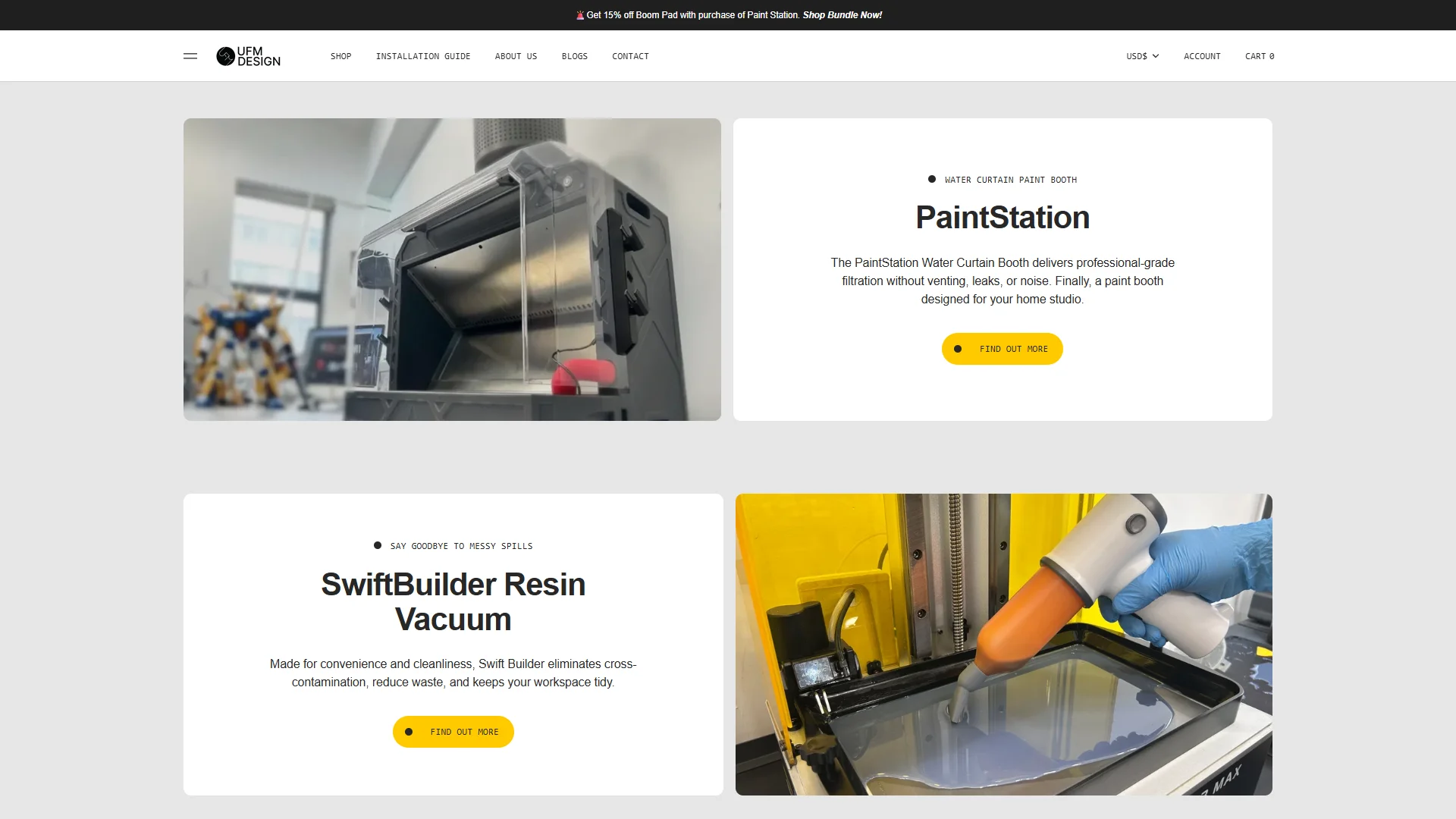
UFM Design is represented in the supplied research as a maker-workspace and post-processing equipment provider. Its documented products include PrintStation, Boom Pad, and Swift Builder. The available pages do not clearly state the company’s founding date, location, mission, target-customer profile, or overall business model. The company’s documented product direction is nevertheless centered on improving the environment around 3D creation rather than presenting a broad printer-manufacturer portfolio.
Pros / Key Features
- PrintStation is described as a 3D printer enclosure with a filtering system intended to provide a safer environment for makers.
- Boom Pad is described as a tool for sanding and polishing, with a design intended to move between handheld detail work and stable benchtop precision.
- UFM Design describes magnetic panels, infinite stacking, and X-Mount lighting in connection with its workspace products.
- Swift Builder is described as helping reduce cross-contamination and waste while keeping the workspace tidy.
- The supplied research reports successful Kickstarter funding exceeding $2 million for PrintStation; readers should verify the current product and delivery status directly with UFM Design.
Use Cases / Best For
UFM Design is best suited to home studios, makers, and users who already have a 3D printer and need a more organized or controlled working area. PrintStation may be relevant where enclosure and filtering are priorities, while Boom Pad and Swift Builder address finishing and workspace-management tasks. The available research does not specify filter performance, supported printer dimensions, materials, certifications, or detailed maintenance requirements, so those points should be checked before purchase. The official site states that shipping, taxes, and discount codes are calculated at checkout.
3. Creality
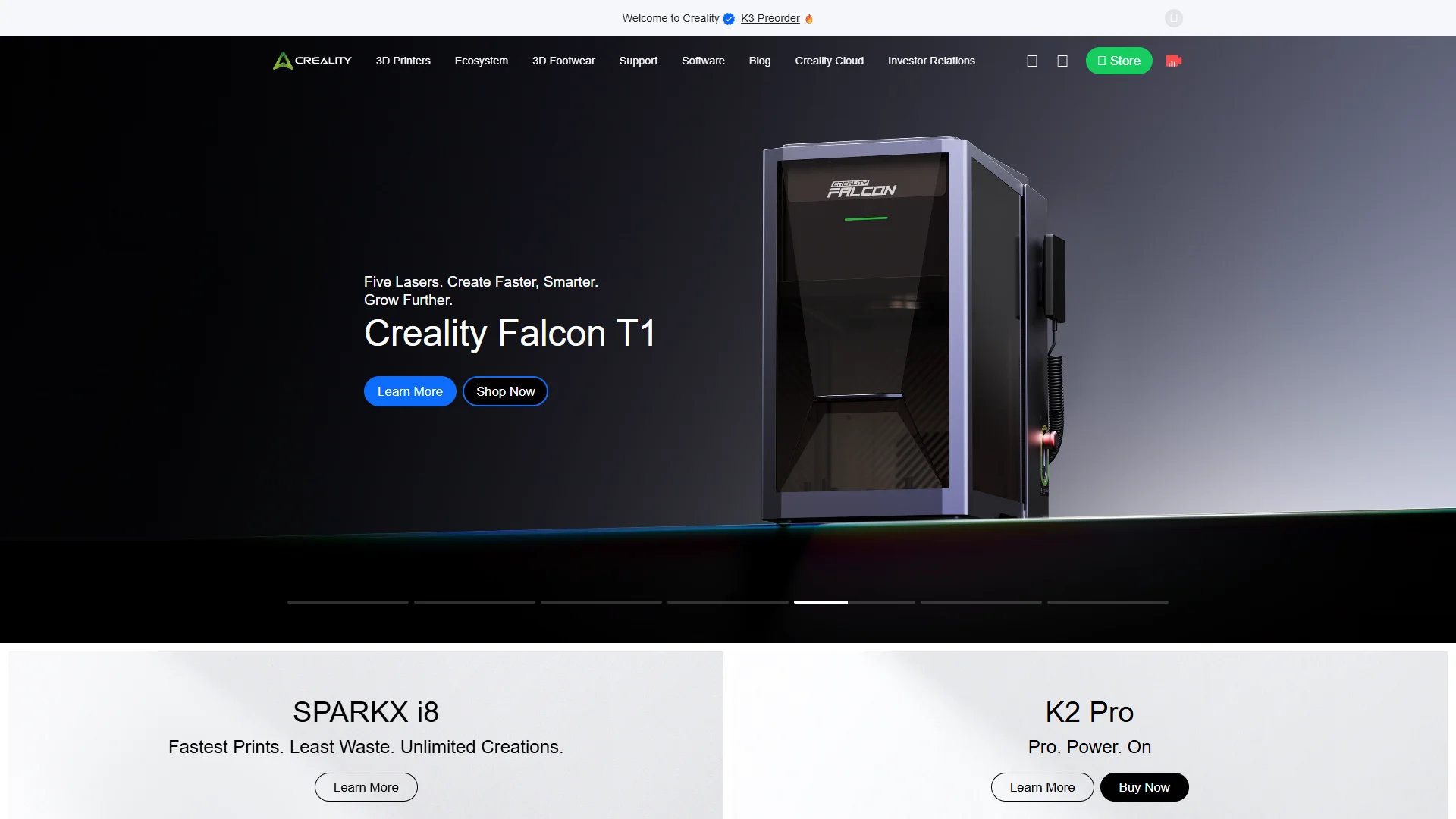
Creality is documented as a 3D-printing hardware company expanding beyond straightforward printer sales into AI, software, global channels, and material-recovery equipment. The supplied research does not clearly state its founding date, location, or formal mission. Its documented product range spans beginner-oriented printers, multicolor and multimaterial printing, model collections, and desktop equipment for shredding plastic waste and producing filament.
Pros / Key Features
- The SPARKX i7 is described as an entry-level printer intended for all ages with some adult supervision.
- The SPARKX i7 is also described as a simple bed-slinger with a budget-oriented price position and multicolor capability.
- KliTek is presented as a nozzle-changing printer technology for faster multicolor and multimaterial printing, reduced waste, and TPU performance.
- The Filament Maker M1 and Shredder R1 are described as a desktop workflow for shredding plastic waste and extruding new filament.
- Creality’s ecosystem includes practical model collections for home, pets, organization, and daily-use projects.
Use Cases / Best For
Creality is best for beginners, families, educators, hobbyists, and makers seeking accessible desktop printing. Its documented recycling equipment may also interest users exploring a more circular material workflow, although actual recycling results depend on feedstock, sorting, contamination, processing controls, and the specific equipment configuration. Buyers should compare the precise printer model, compatible materials, nozzle or tool-changing system, software, safety features, warranty, and regional support before purchase. The supplied research cites a CNET test reporting strong towers and good dimensional accuracy for a low-priced model, but that result should not be generalized to every Creality product.
4. Additive Manufacturing Users Group
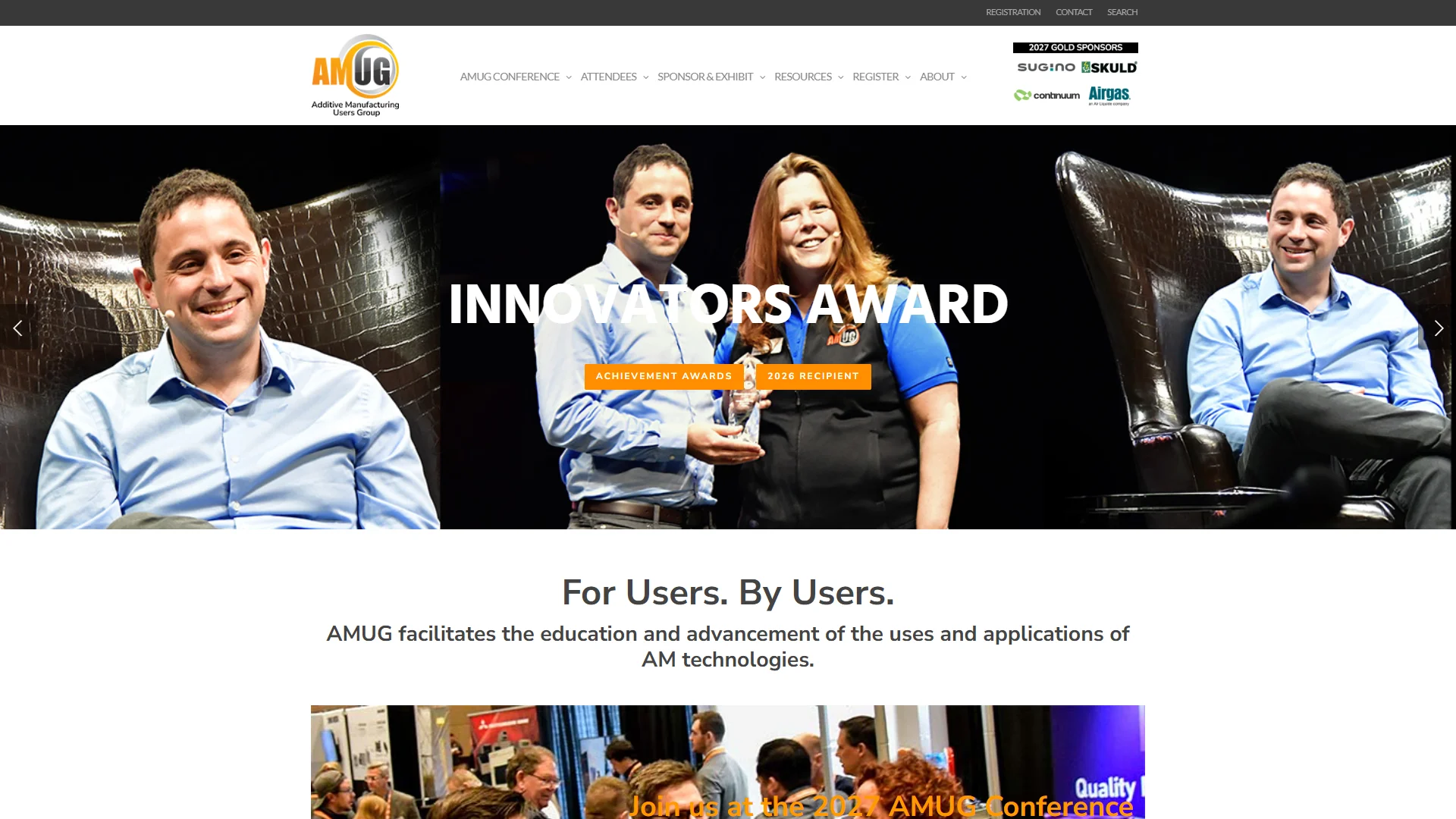
Additive Manufacturing Users Group is not presented in the supplied research as a printer manufacturer. It is an industry user group associated with the AMUG Conference and professional knowledge exchange. The available dossier does not clearly state its founding date, location, target markets, product catalogue, or business model. Its documented value is educational and community-based rather than centered on selling a particular printer or material.
Pros / Key Features
- The AMUG Conference provides access to more than 100 technical sessions, according to the supplied research.
- Conference programming includes hands-on workshops, keynotes, and an Innovators Showcase.
- The organization describes additional hands-on and interactive workshops throughout the week.
- Scholarships are awarded to one student and one educator, as documented in the supplied source material.
Use Cases / Best For
Additive Manufacturing Users Group is best for professionals who need practical education, peer exchange, and exposure to real-world additive-manufacturing workflows. It may be useful to engineers, operators, designers, educators, students, and managers evaluating how 3D printing is used in production. Because it is not documented here as a machine supplier, it should not be compared with printer manufacturers on build volume, print speed, or material compatibility. Readers should check the official AMUG website for current conference dates, eligibility, registration, sessions, workshops, and scholarship information.
5. EOS
EOS is documented as a provider of high-end additive-manufacturing solutions covering both metal and polymer systems. The supplied research does not clearly state the company’s founding date, location, formal mission, or business model. Its documented technology scope includes metal printer systems, polymer printer systems, compatible materials, application guidance, and services intended to help organizations move toward production-ready additive manufacturing.
Pros / Key Features
- EOS provides portfolios of metal and polymer 3D printer systems and associated materials.
- Smart Fusion is described as a metal additive-manufacturing development using real-time intelligent heat management and a reduction in support structures.
- EOS identifies aluminum as a material relevant to applications including aerospace and automotive.
- FDR technology is described by EOS as enabling fine detail without sacrificing quality.
- The documented industry focus includes energy, defense, space, aviation, and semiconductor sectors.
- Additive Minds is presented as a resource for helping address additive-manufacturing challenges and develop production-ready solutions.
Use Cases / Best For
EOS is best for industrial users evaluating metal or polymer additive manufacturing for demanding applications. Its documented sector coverage makes it relevant to aerospace, automotive, energy, defense, space, semiconductor, and other engineering environments. The appropriate selection depends on the required material, qualification pathway, geometry, production volume, post-processing, and quality system. Prospective customers should request model-specific data on productivity, dimensional performance, material qualification, software, facility requirements, operator training, service, and total cost of ownership rather than relying on general technology descriptions.
6. Flashforge
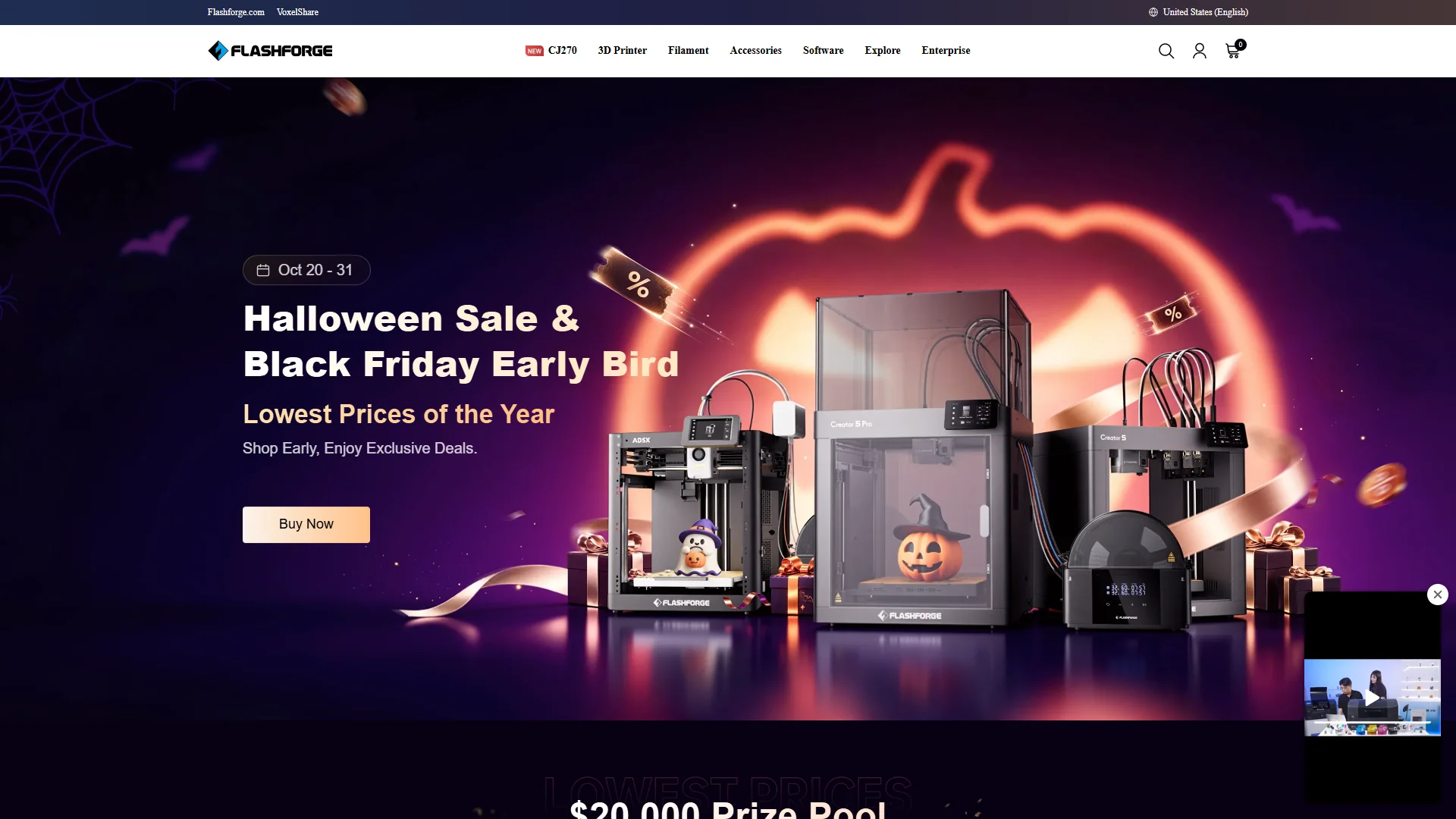
Flashforge is included as the sixth name in the supplied roster, but the accompanying research dossier does not clearly document its company background, product categories, materials, features, market scope, or competitive advantages. Because the available source material does not provide verifiable details, this review does not assign specific printer models, speeds, materials, build volumes, certifications, or support policies to Flashforge. The official website remains the appropriate source for current product and service information.
Pros / Key Features
- The company has an official website through which current products and specifications can be checked.
- The supplied dossier does not provide enough evidence to make a model-level comparison.
- Buyers should evaluate each current Flashforge listing individually rather than treating the brand as a single technology or performance category.
Use Cases / Best For
Flashforge is best considered by readers who want to investigate an additional printer supplier and compare its current official listings with other desktop or professional options. Before selecting a model, confirm the intended user group, compatible materials, enclosure and ventilation requirements, software workflow, maintenance process, warranty, spare parts, regional availability, and service arrangements. These details are not clearly stated in the supplied research and should not be inferred from the brand name alone.
How to Choose
The best option depends first on the type of decision being made. TCT Asia and Additive Manufacturing Users Group are primarily useful for market discovery, education, and professional exchange. UFM Design focuses on the workspace and finishing environment. Creality is documented across accessible desktop printing and related material-handling equipment. EOS addresses industrial metal and polymer additive manufacturing. Flashforge requires model-by-model verification because the supplied research does not provide sufficient product evidence.
- Define the application: Separate visual prototypes, functional parts, education, production tooling, end-use components, and post-processing tasks before comparing suppliers.
- Match the material: Check whether the required polymer, TPU, aluminum, or other material is officially supported and whether material qualification data is available.
- Assess production scale: Desktop equipment may suit individual projects, while industrial systems require evaluation of throughput, repeatability, facility needs, and workflow integration.
- Review safety requirements: Consider enclosure design, filtration, ventilation, heat, powder or resin handling, waste management, and operator training.
- Check software and workflow: Confirm slicer compatibility, monitoring, data management, model preparation, post-processing, and integration with existing tools.
- Calculate total cost: Include equipment, materials, consumables, maintenance, spare parts, installation, training, post-processing, energy, and downtime.
- Verify support: Ask about warranty coverage, response times, local service, documentation, installation, and replacement-part availability.
- Request evidence: For professional purchases, seek application samples, process data, material documentation, and references relevant to the intended use.
Final Verdict
TCT Asia ranks first as the most useful starting point for broad research into the changing additive-manufacturing landscape, although current event and technology details must be confirmed on its official website. UFM Design is the most relevant choice for improving a maker workspace, enclosure, and finishing process. Creality offers the broadest documented connection to accessible desktop printing, multicolor and multimaterial workflows, and desktop filament recovery. Additive Manufacturing Users Group is best for technical learning and professional exchange rather than machine procurement. EOS is the strongest fit in this roster for industrial metal and polymer additive-manufacturing evaluation. Flashforge remains a brand to investigate through current official listings, because the supplied dossier does not establish enough product facts for a more specific judgment.
FAQs
1. Which option is best for researching new 3D printing technology?
TCT Asia is the recommended starting point in this ranking because it is positioned as an industry-discovery resource rather than a single printer model. Readers should use its official website to confirm current programs, exhibitors, and technology information, then validate equipment details with individual manufacturers.
2. Which brand is most suitable for a home maker?
UFM Design is relevant to home makers who need an enclosure, filtering, workspace organization, sanding, polishing, or contamination-control tools. Creality is more directly relevant to users seeking a documented desktop printer ecosystem, including beginner-oriented and multicolor or multimaterial options.
3. Which option is intended for industrial additive manufacturing?
EOS is the clearest industrial option in the supplied roster, with documented metal and polymer systems, compatible materials, Smart Fusion, FDR technology, and applications spanning sectors such as aerospace, energy, defense, space, and semiconductors. Industrial buyers should still request model-specific technical and commercial information.